

10 Most Popular Solitaire Variations You Need to Try
Introduction to Solitaire Variations
Solitaire variations add fresh challenges and renewed fun by introducing unique rules, layouts, and strategies to the classic card game.
Exploring different solitaire types breaks the routine and sharpens your skills through diverse game mechanics. From the simple elegance of Klondike to the strategic depth of FreeCell, these variations offer engaging experiences for players at every level.
Klondike Solitaire – The Classic Game Everyone Knows
Klondike Solitaire is the original and most widely played form of solitaire. The objective is to build four foundation piles in ascending order by suit, starting with the Ace.
This version begins with seven tableau columns with cards partially overlapped and only the top card face-up.
Klondike’s straightforward setup and moderate difficulty make it a perfect introduction to solitaire card games. It emphasizes patience and planning while maintaining an accessible pace.
Basic rules involve moving cards between columns in descending order and alternating colors to reveal hidden cards, aiming to free all cards onto the foundation piles.
Spider Solitaire – Popular Multi-Deck Variation with Increased Complexity
Spider Solitaire uses two decks of cards, making it more challenging than Klondike due to its larger tableau and hidden cards.
Players must organize stacks in descending sequences of the same suit, removing completed suit runs from the table.
The multi-deck setup and focus on creating uniform suit sequences force more strategic thinking and long-term planning.
This game appeals to those who enjoy a deeper puzzle and more deliberate gameplay, often requiring multiple passes through the cards.
FreeCell – Strategy-Driven Variant with All Cards Visible from the Start
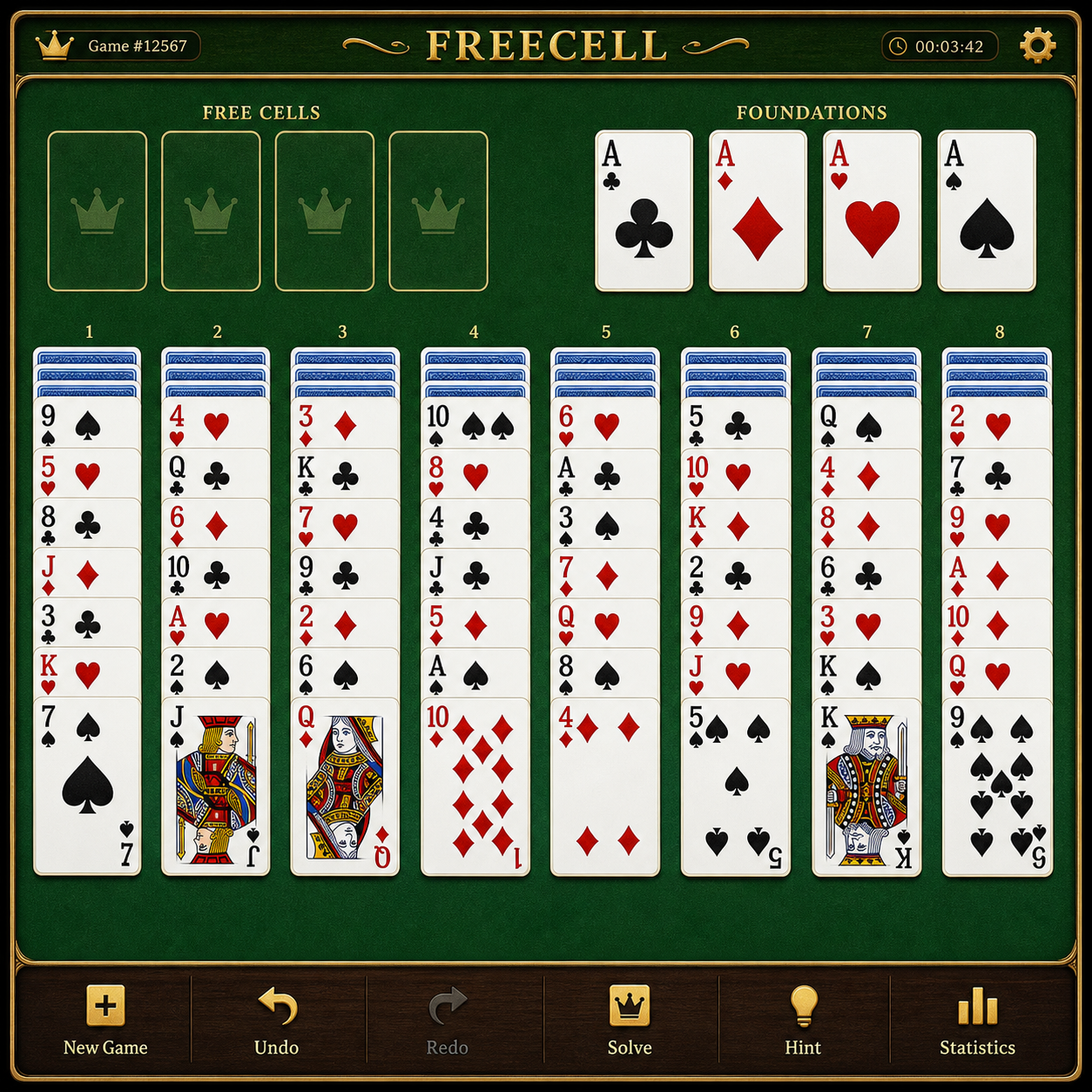
FreeCell is a solitaire variation distinguished by having all cards visible at the start, eliminating luck and stressing strategic moves.
The goal is similar to Klondike—organize cards into four foundation piles by suit in ascending order.
Players use four free cells to temporarily hold cards, allowing greater maneuverability.
Because no cards are hidden, FreeCell rewards careful planning, thoughtful sequencing, and foresight, making it popular among players who prefer skill over chance.
Pyramid Solitaire – Unique Layout with Emphasis on Pairing Cards
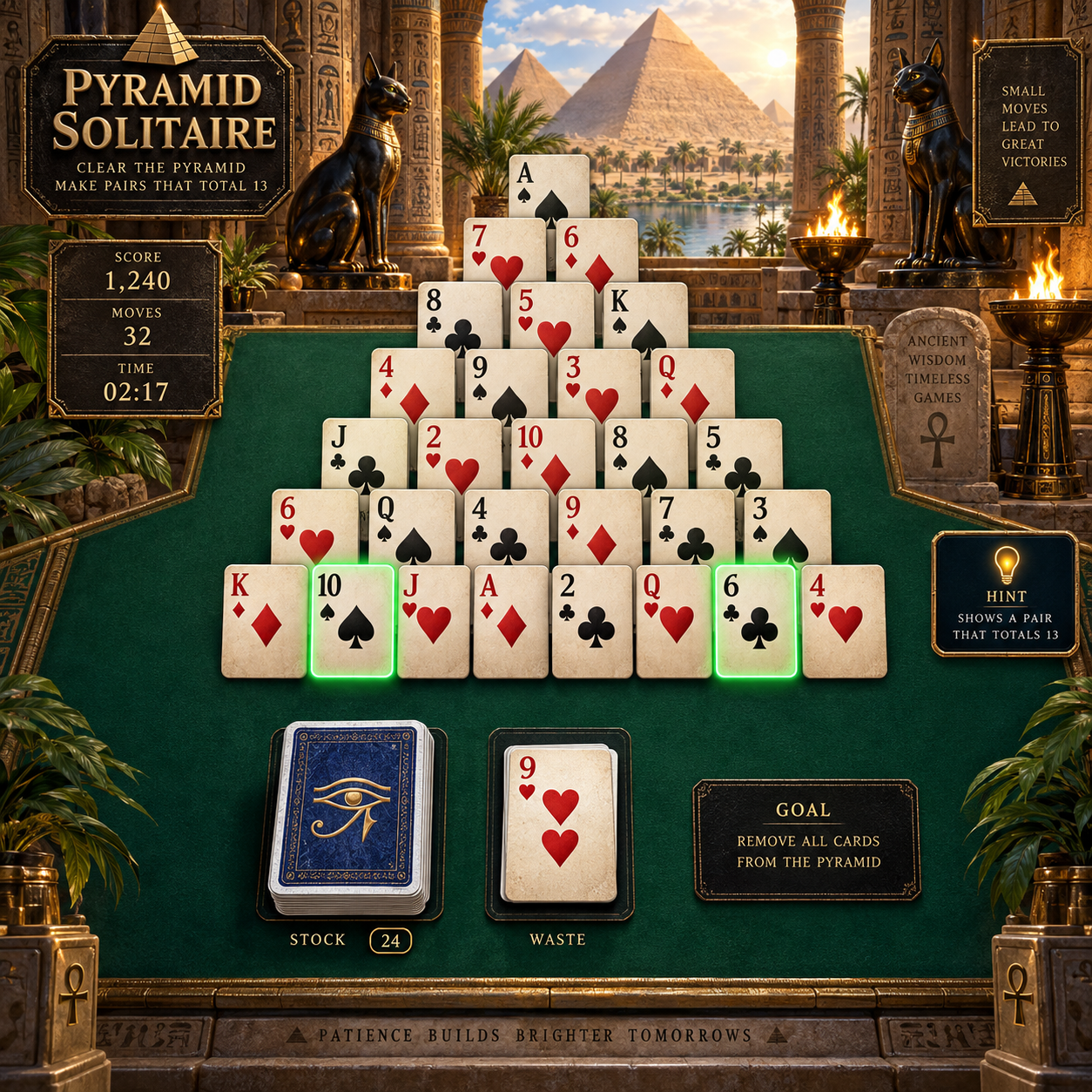
Pyramid Solitaire features a distinctive card layout shaped like a pyramid, where the objective is to remove pairs of cards that add up to 13.
The game relies heavily on recognizing card pairs and careful sequencing to unlock cards covered beneath others in the pyramid.
This variation diverges from building foundation piles, focusing instead on matching and clearing pairs, adding a layer of numerical strategy and visual challenge.
Pyramid’s simple pairing mechanic is easy to learn yet requires careful planning to avoid blocking future moves.
TriPeaks Solitaire – Fast-Paced Game with a Distinctive Tableau Design
TriPeaks Solitaire is characterized by its three overlapping peaks of cards and a fast-paced, draw-based mechanic.
The goal is to clear cards by selecting those one rank higher or lower than the foundation card, cycling through the draw pile as needed.
This format encourages quick decision-making and continuous momentum, making it ideal for players looking for an energetic solitaire experience.
TriPeaks, also known as Tri Towers, balances luck and skill, rewarding players who can spot sequences rapidly before running out of moves.
Other Notable Variations
In addition to the classics, there are several other solitaire games worth exploring that offer new twists:
- Golf Solitaire: Players try to remove cards from the tableau by playing cards one rank higher or lower than the foundation, focusing on reducing the tableau quickly.
- Yukon Solitaire: Similar to Klondike but with a twist—players can move groups of cards regardless of their order, making it more flexible and dynamic.
- Scorpion Solitaire: A challenging variation combining elements of Spider and Yukon with unique tableau movement rules.
These variants diversify gameplay by tweaking setup, tableau interactions, and winning conditions, appealing to different tastes and skill levels.
How to Choose the Right Solitaire Game for You
Selecting the ideal solitaire variant depends on your preferred balance of challenge, speed, and strategy.
If you enjoy a casual, meditative experience, Klondike or Pyramid Solitaire might suit you best.
For deeper strategic involvement, consider FreeCell or Spider Solitaire, which demand careful planning and foresight.
Time constraints also matter—TriPeaks and Golf Solitaire offer quicker, high-energy rounds, while Yukon and Scorpion provide extended, thoughtful play.
Assess your skill level and whether you prefer visible cards or elements of luck to find a variation that keeps you engaged without frustration.
Tips for Beginners When Trying New Solitaire Variations
When branching out to new solitaire versions, start by learning the core rules and basic objectives to avoid overwhelm.
- Understand setup and winning conditions: Each variation has unique layouts and goals, so clarity here will guide your strategy.
- Focus on uncovering hidden cards: Most games reward moves that reveal face-down cards earlier.
- Be patient and plan ahead: Avoid impulsive moves and think several steps forward, especially in complex games like Spider or FreeCell.
- Use free cells or empty spaces strategically: In games like Yukon and FreeCell, these assets are essential to rearranging cards effectively.
- Practice consistency: Regular exposure will improve pattern recognition and strategy formulation.
With practice, trying various solitaire versions adds rewarding layers of mental stimulation and entertainment beyond the classic formats.
FAQ
What is the easiest solitaire variation for beginners?
Klondike Solitaire is generally considered the easiest for beginners due to its straightforward rules and familiar setup.
Can I play these solitaire variations on mobile or online?
Yes, most popular solitaire variations including Klondike, Spider, FreeCell, and Pyramid are widely available on mobile apps and online platforms, allowing easy access anywhere.
Are all solitaire variations played with one deck?
No, while many solitaire games use a single 52-card deck, Spider Solitaire requires two decks, and some less common versions may use customized setups.
Which solitaire game requires the most strategy?
FreeCell is often considered the most strategy-intensive because all cards are visible, and success relies entirely on skillful planning instead of chance.
How do you win at Pyramid Solitaire?
To win Pyramid Solitaire, you must remove pairs of exposed cards whose values add up to 13, clearing the entire pyramid without getting stuck.
Exploring these solitaire variations not only enhances your card playing repertoire but also keeps your mind sharp and entertained. Whichever game you pick, the thrill of mastering new challenges is always just a shuffle away.